
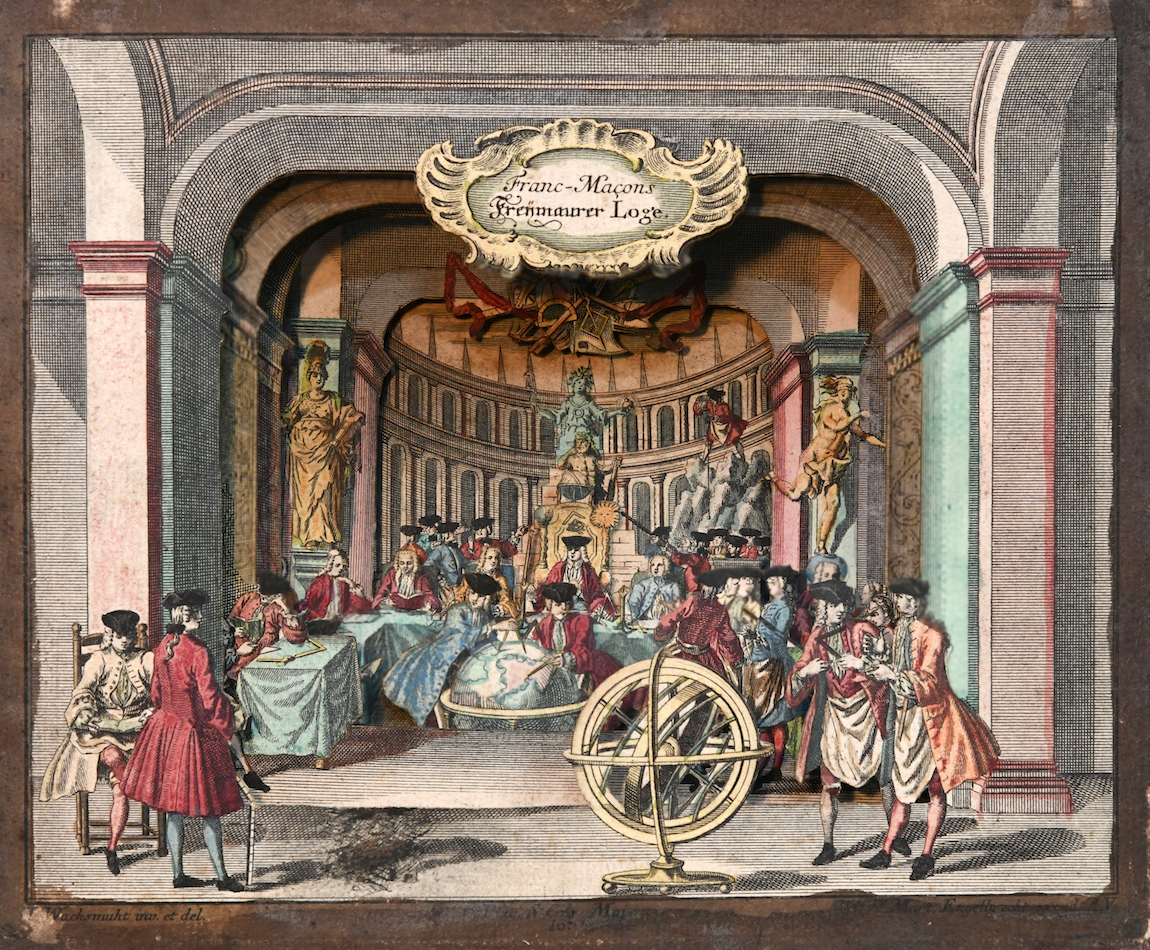
Historiek van de vrijmetselarij
Er bestaan verschillende theorieën over de oorsprong van de vrijmetselarij, maar de algemene consensus onder experts is dat zij teruggaat op de steenhouwers uit de middeleeuwen die onze kastelen en kathedralen hebben gebouwd. De oorsprong en de ontwikkeling van de maçonnieke Orde zoals wij die kennen, bevinden zich op de Britse Eilanden. Daar ontstond tegen het einde van de 17e eeuw de moderne of ‘speculatieve’ vrijmetselarij, in tegenstelling tot de ‘operatieve’ vrijmetselarij van de bouwmeesters.
De ‘operatieve’ metselaars uit de middeleeuwen trokken van bouwplaats naar bouwplaats en kwamen samen in loges, die zowel werkplaatsen als verblijfplaatsen waren. Zij werkten er onder leiding van een bouwmeester, of ‘meester van de loge’, en volgden een lange leertijd voordat zij volleerde vaklieden werden, meesters van hun kunst. Dit ging gepaard met de overdracht van bepaalde ‘geheimen’. In Engeland beschikten de loges over manuscripten met beroepsregels, de “Old Charges” of “Oude Plichten”. Deze eindigden met een opsomming van morele en professionele regels die een ware beroepsethiek vormden.
Het geleidelijke verdwijnen van de grote bouwprojecten (kathedralen, abdijen, kastelen enz.) verminderde de rol van de operatieve loges, terwijl buitenstaanders van het bouwberoep — vaak intellectuelen, aristocraten of welgestelde burgers — zich erbij aansloten. Zij werden vermoedelijk gedreven door een streven naar universaliteit, religieuze tolerantie en naar samenkomst rond brede en gemeenschappelijke idealen. Dit zou het gezicht van de moderne vrijmetselarij hebben gevormd.
De loges gaven geboorte aan een broederschap die tot doel had een spiritualiteit en een ethiek te verspreiden, verhuld door symbolen en geïllustreerd door legenden. De werktuigen van de metselaar, en zelfs de steen die hij bewerkte, werden symbolische dragers van een metafysische en morele reflectie.
Uit deze ontmoeting ontstond de moderne vrijmetselarij, die officieel het licht zag in 1717, toen vier Londense loges samenkwamen om wat de Grootloge van Engeland zou worden, op te richten. In 1723 werden de Constituties gepubliceerd door de presbyteriaanse predikant James Anderson. Deze compilatie van de operatieve ‘Old Charges’ bevestigde het principe van religieuze tolerantie, met respect voor alle geloofsovertuigingen. Vanaf dat moment kende de vrijmetselarij een snelle groei in Groot-Brittannië, in continentaal Europa — met name in onze streken — en in Amerika.
De vrijmetselarij in België

De vrijmetselarij werd reeds in 1726 in Parijs geïntroduceerd en verspreidde zich geleidelijk in onze streken, toen deel uitmakend van de Oostenrijkse Nederlanden, het Prinsbisdom Luik en het Verenigd Koninkrijk der Nederlanden, vóór de oprichting van het Grootoosten van België in 1833. De vormgeving van het maçonnieke landschap in ons land is sinds zijn ontstaan sterk beïnvloed door historische en politieke omstandigheden. In de loop der tijd schafte het Grootoosten van België, in tegenstelling tot de ‘landmarks’ van de universele vrijmetselarij, in 1854 het verbod op politieke en religieuze discussies in de loge af en verwijderde het in 1872 ook de verwijzing naar de Opperbouwmeester van het Heelal.
Niet akkoord met deze evolutie, richtten vijf loges in 1959 de Grootloge van België op, die opnieuw aansluiting wilde vinden bij universaliteit en traditie. Zij werd door bijna alle Grootloges in de wereld erkend dankzij haar respect voor de beginselen van de maçonnieke regulariteit.
Als gevolg van enkele tekortkomingen ten aanzien van de regels van de traditionele vrijmetselarij verloor de Grootloge van België echter in 1979 de erkenning van nagenoeg alle Grootloges. Verschillende van haar leden, die trouw bleven aan hun engagementen en nog steeds gehecht waren aan de traditionele regels van de universele vrijmetselarij, en die een internationale erkenning wilden behouden, richtten op 15 juni 1979 de Reguliere Grootloge van België (RGLB) op.
Zo bevindt ons land zich in een atypische situatie met meerdere obediënties. Samen vertegenwoordigen zij twee maçonnieke stromingen: enerzijds de traditionele en reguliere stroming — wereldwijd veruit de meest verbreide — waartoe uitsluitend voor België de RGLB behoort en die in de eerste plaats spiritualistisch is; anderzijds een maatschappelijke stroming — vooral aanwezig in Frankrijk en België — die afstand heeft genomen van de maçonnieke traditionele ‘landmarks’.